
CJNG's Power Vacuum: El Mencho's Dead, a U.S. Born Heir Steps Up, and Mexico's Grill Is Still Sizzling
The cartel just lost its iron-fisted kingpin in a raid, unleashed mechanized hell across 20 states, and now the throne might go to a California-born stepson.

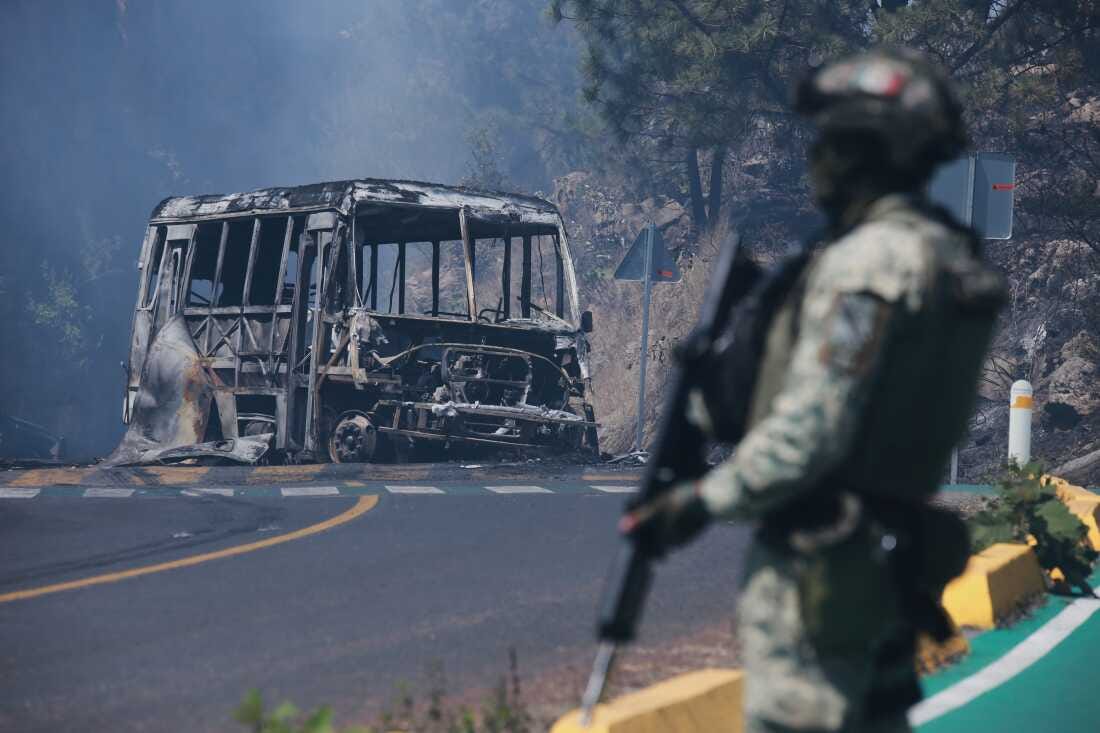
The headlines are screaming “stabilization” and “normalcy returning.” President Sheinbaum’s team is out there claiming most of the 252+ narcobloqueos cleared, flights staggering back into Puerto Vallarta and Guadalajara, schools reopening in spots, and the extra 10,000 troops flooding Jalisco have the situation “under control.”
Bullshit optics.
What actually happened after the February 22 Tapalpa raid—where Mexican special forces (U.S. intel assist) dropped CJNG boss Nemesio “El Mencho” Oseguera Cervantes—was textbook mechanized insurgency retaliation dialed to cartel scale. Road denial with torched buses, semis, and tankers blocking highways (Highway 200 to the PV airport became a graveyard of charred vehicles). Arson on economic nodes: Costco parking lots, gas stations, pharmacies, OXXOs, banks—69+ fires reported nationwide. Ambush kills on 25+ National Guard in six separate hits. Bounties placed on soldiers (~$1,100/head) turning into real body counts. Thick black smoke plumes blanketing skylines, blinding helo/drone ISR like classic active denial tactics we’ve seen in Fallujah or Kandahar before the next wave.
This wasn’t random tantrum. It was calculated: paralyze movement, sabotage logistics (no fuel/meds = wounded bleed out or complicate treatment), terrorize civilians into sheltering (bathtubs, hotels), and project “we still own the roads” post-decapitation. Tourists filmed from balconies—painting their own buildings as fixed positions—while crews refused flights and U.S. Embassy shelter-in-place orders lingered in Jalisco/Nayarit zones. Romantic Zone turned gray-zone no-go after dark: no taxis/Ubers, spot fires every 15-30 minutes.
And now the real twist—the power vacuum is filling fast, and it’s absurd.
Anonymous CJNG sources (propaganda vids with masked gunmen circulating on X) are naming Juan Carlos Valencia González (”El 03” / “El Pelón”) as the new leader. El Mencho’s stepson, born September 12, 1984, in Santa Ana, California—straight U.S. citizen by birthright. Dual nationality, $5 million DEA/State bounty for narcotrafficking/firearms conspiracy. He runs Grupo Élite, the cartel’s elite armed wing: drones dropping IEDs/grenades, armored “narco-tanks,” RPGs for helo threats, tactical gear, the ruthless operators who pioneered drone bombing in Michoacán/Guerrero.
Family loyalists (via his mom Rosalinda “La Jefa” González Valencia, the money-laundering brains behind Los Cuinis) are pushing the dynastic play to avoid fracture. Analysts call him the “logical heir apparent” or “de facto second-in-command”—his control of elite units gives him muscle to consolidate quick. But regional heavyweights like Audias Flores Silva (”El Jardinero,” territorial control in Nayarit/Zacatecas), Gonzalo Mendoza Gaytán (”El Sapo,” ports/logistics cash flow), and Ricardo Ruiz Velasco (”El Doble R,” Guadalajara ops) might not bow. No direct blood heir (son “El Menchito” life-sentenced in U.S. prison), so high odds of splintering if El 03 can’t lock it down.
A U.S.-born citizen potentially helming the world’s most militarized cartel? That’s geopolitical napalm. Fentanyl flooding north, daily overdose deaths in the tens of thousands—now directed by an American passport holder. Trump-era rhetoric (”cartels as FTOs,” threats of strikes/tariffs) gets even hotter, but any kinetic move risks the al-Awlaki hypocrisy trap: executive overreach killing a citizen abroad without trial.
Sen. Markwayne Mullin (R-OK) dropped the blunt truth on CNBC Squawk Box this morning: “Americans should not be going down to Mexico right now. It’s not safe.” No hedging about resort bubbles. State Department STEP alerts, embassy SIP lingering—it’s the Senate version of what ground truth has been screaming: this was never safe, and the “relaxed vibes” posts were bubble illusion.
Mexico’s not collapsing tomorrow. Tourism optics held somewhat, World Cup prep pressures containment, the surge bought breathing room. But when killing one kingpin turns the country into live-action warzone for days—blockades nationwide, bounties paid in blood, drones/RPGs in play, and now a Cali-born boss—the monopoly on force is cracked. If El 03 consolidates fast, CJNG stays unified monster. Silence drags or splinter shootouts pop? Low-boil insurgency pockets in Jalisco/Michoacán, rivals probing edges, fentanyl spikes.
This grill’s uneven heat. Surface char cooling in spots, but embers popping where you least expect. Hold your lunchpails tight—shit just got weirder, and it’s far from over.
The Mexican National Guard (Guardia Nacional) is the one bleeding the most right now. They’re the frontline hammer—militarized police created in 2019, thrown into the streets to absorb the brunt of CJNG’s retaliation. At least 25 Guard members confirmed KIA in six separate ambushes across Jalisco on Sunday and Monday alone. That’s not collateral; that’s targeted punishment for the Tapalpa raid. They’re the ones clearing narcobloqueos block by block, holding Highway 200 to the Puerto Vallarta airport open against hit-and-run re-seeding, patrolling the Romantic Zone gray zones where taxis vanish after dark and spot fires still flare every 15–30 minutes. The extra surge—thousands airlifted in on top of the baseline 7,000 federal presence—has them stretched razor-thin, facing drones for spotting, RPGs for vehicle kills, armored narco-tanks shrugging off small arms, and bounties that literally pay cash for every uniform dropped. They’re not elite spec-ops; they’re the visible bayonets, the conscripts and young Guard guys earning peanuts while the cartel treats them like rival militia.
The Mexican Navy (SEMAR), by contrast, is playing scalpel, not hammer. Naval special forces and Marines were in the mix for the initial Tapalpa hit—providing tactical muscle, air mobility (helicopters for insertion/extraction), and the kind of rapid-reaction capability that lets them punch above weight in high-threat ops. Post-raid, SEMAR elements focused on coastal choke points (Manzanillo port is CJNG’s import/export artery), reinforced the prioritized Marina corridor in Puerto Vallarta for optics, and ran low-level helo buzzes over resorts and hotels to deter and gather ISR. They’re less exposed to ground ambushes than the Guard—Navy doctrine keeps them from heavy urban foot patrols—but when things get kinetic, they’re the quick-reaction force that can airlift reinforcements, evacuate wounded, or hit hard on leadership remnants like “El Tuli” (Mencho’s logistics/finance coordinator, smoked in a follow-up op Tuesday with a cash haul in tow).
Together they’re a joint effort under SEDENA oversight: Guard holds terrain and eats the casualties, Navy brings precision, air support, and coastal denial. The 10,000-troop flood bought breathing room—most blockades cleared by Monday evening, flights staggering back, smoke thinning over Guadalajara and PV skylines—but it’s still a grind. CJNG’s hardware edge (drones dropping IEDs, RPGs vs. low-flying helos, armored convoys) means every clearance risks ambush, every patrol risks bounty hunters, and every quiet hour risks the vacuum splintering into factional beefs over plazas, labs, and fentanyl routes.
If El 03 locks in fast—his Grupo Élite muscle and family backing give him the edge—the cartel stays a unified, militarized monster with a California-born boss running the show. If not, and regional bosses like “El Jardinero,” “El Sapo,” or “El Doble R” start carving slices, we get low-boil insurgency pockets: more ambushes, more bounties, more drone harassment, more gray zones where the state’s writ is performative at best.
The U.S. Embassy in Mexico didn’t mince words or wait for the dust to settle—they went straight to protective posture. Starting February 22 (the day of the Tapalpa raid and immediate retaliation), the Embassy and consulates rolled out security alerts urging U.S. citizens to shelter in place in Jalisco (Puerto Vallarta, Chapala, Guadalajara, Ciudad Guzmán) and Nayarit (Nuevo Vallarta area), plus spillover in Tamaulipas, Michoacán, Guerrero, Nuevo León, and up to 18 states at peak. U.S. government staff were ordered to hunker down and work remotely in those spots—Guadalajara, Puerto Vallarta (Jalisco/Nayarit), Ciudad Guzmán, Tijuana, Chiapas, Michoacán—until blockades cleared. Citizens got the same strong push: minimize movement, avoid law enforcement ops zones, stay vigilant, monitor updates.
This wasn’t vague “exercise caution” boilerplate. The Embassy flagged real disruptions—no reliable taxis/ride-shares in PV, businesses suspending, roadblocks choking airport access (flights canceled or staggered, crews hesitant), and the 24/7 crisis hotline slammed with hundreds of calls from stranded Americans dodging charred buses and wreckage just to reach terminals. Updates through February 23–24 narrowed some areas (e.g., Quintana Roo/Cancún “returned to normal,” most airports operating), but Jalisco and Nayarit remained under active shelter-in-place due to lingering criminal activity and blockades. Embassy personnel stayed locked down longer than public spin suggested.
Contrast that with the resort “relaxed vibes” posts and Sheinbaum’s “stabilization” line—the Embassy treated the threat as credible and fluid, prioritizing citizen safety over tourism optics. No downplaying the gray-zone risks in Romantic Zone or the disconnect between beach selfies and citywide paralysis. Their handling underscores the baseline: this was never truly safe, and the vacuum (with El 03’s U.S.-citizen heir claim floating) keeps the embers hot enough for layered alerts to linger.
The gabachos (that’s the slang term locals sometimes use for gringos/Americans, often with a mix of eye-roll and resentment) with their iPhones out filming from balconies, rooftops, or hotel windows in Puerto Vallarta during this CJNG retaliation wave is one of the dumbest, most dangerous moves you can make in a fluid gray-zone like this.
From ground reports and eyewitness accounts rolling in (Reuters clips, tourist interviews on CNN/Reuters, local X videos, and earlier drops), tourists have been doing exactly that: pulling out phones to capture thick black smoke plumes over the bay, burning buses/semis blocking streets, low-flying military helos buzzing the Marina corridor, or even masked gunmen rolling in packs of 5–6 on motorcycles or in armored pickups. Some are posting live or near-live to socials—”look at this chaos from our balcony!”—thinking it’s just content or proof for family back home.
Why this is a bad move—actually, a potentially lethal one:
Painting targets on buildings: CJNG spotters (they use drones for ISR, motorbike scouts, and ground teams) see phones glinting from high vantage points. In asymmetric fights like this, elevated filming looks exactly like forward observers spotting for artillery or special forces. Gunmen have charged buildings or fired warning shots because they assume tourists are sending live coordinates to SEDENA/GN units. One X drop you referenced earlier nailed it: “masked CJNG hitmen charging buildings because they think tourists are filming to send live coordinates to Mexican Special Forces.” That’s not paranoia—it’s doctrine in cartel-controlled zones where paranoia keeps you alive.
Turning neutral civilians into perceived threats: Cartels avoid mass tourist casualties (bad for business, brings overwhelming heat from U.S./Mexican response), but they don’t hesitate on individuals who look like they’re aiding the enemy. Filming = potential intel leak = threat. We’ve seen similar in Culiacanazo ‘19 or Michoacán drone wars—people recording from windows get marked as snitches or spotters.
Amplifying propaganda risk: Posting videos (even innocently) feeds the cartel’s psychological ops. They use social media for recruitment/intimidation; clips of their roadblock or hit team gets reposted, glorified, or used to dox locations. Meanwhile, it paints the whole resort bubble as complicit or voyeuristic, eroding any “tourist immunity” locals might grant.
Distraction from real survival: While you’re zoomed in on the smoke or gunmen, you’re not monitoring exits, hotel staff warnings, or embassy alerts. Tourists have been stranded longer or risked movement because they were too busy documenting instead of hunkering down or evacuating smartly (e.g., waiting for cleared corridors vs. dodging wreckage impulsively).
The Embassy’s shelter-in-place orders (still active in Jalisco/Nayarit/PV zones as of Feb 24) and advisories to “minimize unnecessary movements” exist for exactly this reason: stay low-profile, don’t draw eyes. Filming from balconies breaks that hard—turns you from “harmless vacationer” into “potential asset or nuisance” in the eyes of armed groups who shoot first and ask questions never.
The firepower CJNG brings to the table isn’t some street-gang collection of pistols and AKs—it’s a full-spectrum, military-grade arsenal that turns them into something closer to a rogue paramilitary force than a traditional cartel. This isn’t hype; it’s documented in seizures, raids, and the retaliation wave that followed El Mencho’s death.
Start with the rocket launchers (RPGs and similar systems): Mexican forces seized rocket launchers capable of downing aircraft and destroying armored vehicles during the Tapalpa raid itself. CJNG has long been aggressive with anti-air threats—shooting down helos in past clashes—and these tools let them threaten low-flying Navy/Guard aircraft buzzing PV resorts or Guadalajara corridors. That’s not cop-level gear; that’s battlefield anti-armor/anti-air denial.
Then the weaponized drones—CJNG pioneered explosive drops (IEDs, grenades) from commercial platforms like modified DJI models. They’ve used them to harass troops, spot targets, and even bomb rivals/state forces in Michoacán/Guerrero fights. In the post-hit chaos, spotty reports of drone activity floated amid the blockades and ambushes, adding an asymmetric layer that blinds ground ISR and stretches responders thin.
Heavy/small arms round it out: .50-caliber machine guns (Browning M2s) on belt-fed mounts, capable of punching through light armor or low-flying helos; belt-fed machine guns; high-caliber rifles (.50 BMG Barrett-style for anti-materiel); grenades; tactical plates, NVGs, comms making elite cells (like Grupo Élite under El 03) look like spec-ops. Bounties on soldiers (~$1,100/head) turn every hit into paid incentive.
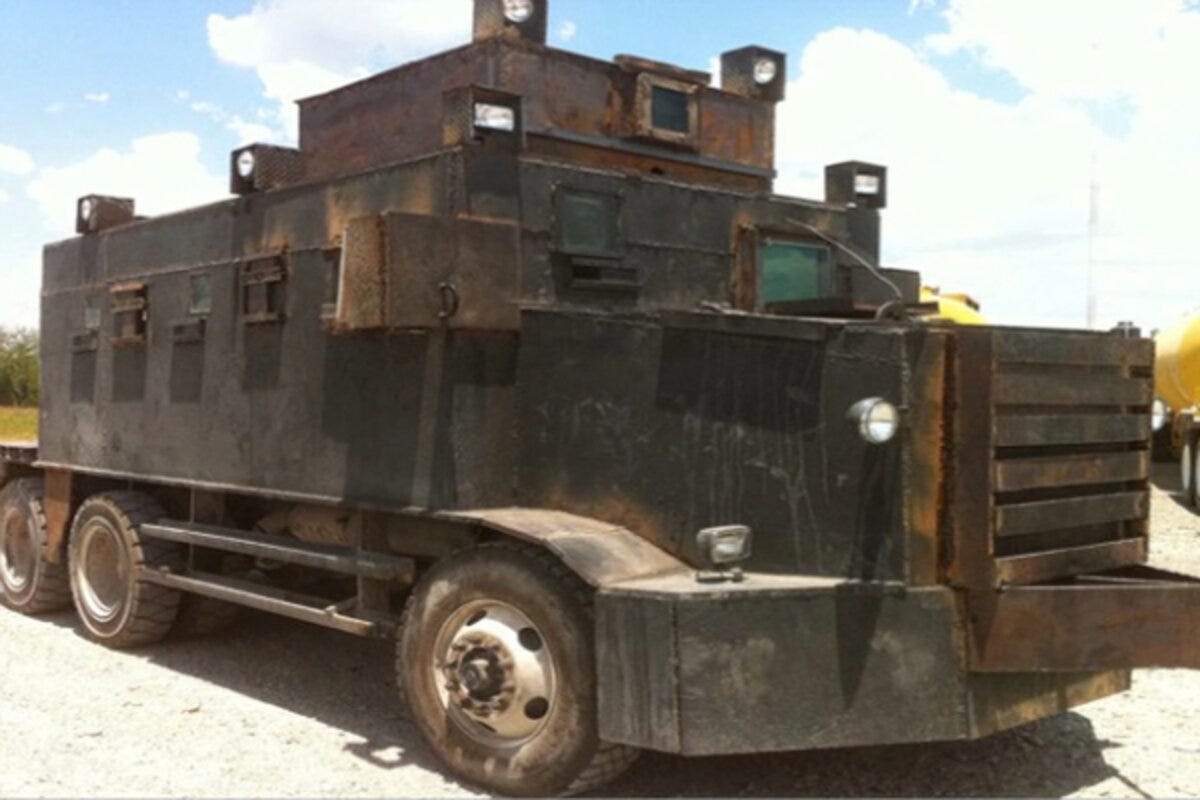
But the real showstopper—the part that makes this mechanized insurgency feel like Mad Max meets narco-war—are the “monster trucks” (monstruos, narco-tanks, rinocerontes). These aren’t factory armored SUVs; they’re stolen full-size diesel pickups or semis retrofitted into rolling fortresses:
Thick steel plating (up to four inches welded on chassis/sides) shrugging off small arms and shrapnel.
Bulletproof windows/glass with firing ports/gun slits for shooting from inside.
Reinforced turrets or mounts for machine guns (.50-cal often belt-fed, ready to rip through convoys or aircraft).
Battering rams on fronts for smashing through barricades or ramming rival vehicles.
Sometimes tire-puncturing launchers or signal jammers (anti-drone tech in newer models).
Capacity for 8–12 gunmen inside, high mobility on highways.
CJNG has been a leader in this—videos and seizures show their versions painted camo, emblazoned with cartel initials, used to project power in gun battles against rivals or security forces. Mexican authorities have seized and destroyed dozens/hundreds over years (e.g., 50 in Tamaulipas in 2024, others in Chihuahua/Sonora with .50-cals capable of downing airships), but the cartel keeps building/refining them in clandestine workshops. In the recent wave, armored hits were reported in ambushes on Guard convoys—presence alone intimidates communities and deters quick pushes.
This kit isn’t random; it’s deliberate escalation under El Mencho—fueled by fentanyl/meth cash flows, corruption networks for imports (Manzanillo port key), black-market sourcing (US guns southbound, Eastern Bloc RPGs/drones). In the vacuum, whoever consolidates (El 03’s Grupo Élite inheriting much of it?) gets the edge in territorial staking. The Guard/Navy surge faces not thugs with pistols, but cells that can roll armored convoys, drop explosives from the sky, punch through with RPGs, and deny movement nationwide.
The turf war that’s now unfolding—or more accurately, the one that’s always been simmering under CJNG’s surface—is the real long game here. El Mencho ran the organization with an iron fist: centralized command, ruthless discipline, family loyalty enforced by fear and cash. With him gone (killed February 22, 2026, in the Tapalpa raid), that glue is dissolving fast. What we’re watching isn’t just “succession drama”—it’s the opening moves of a violent, multi-front turf war over the single largest criminal economy in the Western Hemisphere.
At stake:
Plazas (territorial control zones): Jalisco core, Michoacán avocado/fentanyl labs, Guerrero poppy fields, Nayarit/Zacatecas corridors, Colima/Manzanillo port for precursor chemicals and finished product outbound.
Routes & logistics: Pacific coast highways, Manzanillo imports (key for Chinese precursors), border crossings into the U.S. Southwest, internal distribution networks feeding the U.S. fentanyl epidemic.
Cash flows: Billions in fentanyl/meth/heroin/cocaine revenue—enough to buy politicians, judges, entire police forces, and build monster trucks/RPG stockpiles.
Hardware & manpower: The armored narco-tanks, drone fleets, RPG caches, .50-cal mounts, elite Grupo Élite cells, and thousands of foot soldiers don’t vanish—they get inherited, contested, or splintered.
But the contenders aren’t folding quietly:
Audias Flores Silva (”El Jardinero”) — Regional heavyweight controlling Nayarit, Zacatecas, Guerrero, parts of Michoacán. Deep territorial roots, labs, armed cells—could carve off a big western slice if he decides family ties don’t bind him.
Gonzalo Mendoza Gaytán (”El Sapo”) — Port and logistics kingpin (Manzanillo artery). Controls cash inflow/outflow; whoever holds the ports holds the oxygen supply.
Ricardo Ruiz Velasco (”El Doble R” / “R2”) — Guadalajara ops and tactical commander. Close to the core, but ambitious enough to push for his own piece.
Others floating: mid-level commanders, splinter cells, even potential alliances with Sinaloa remnants eyeing fentanyl turf while CJNG is distracted.
This isn’t clean “one king rises.” It’s a federation fracturing. CJNG has always been more coalition than pyramid—autonomous cells paying tribute to Mencho. Without him, tribute becomes optional, loyalty becomes negotiable, and plazas become battlegrounds. Expect:
Localized shootouts over labs/routes in Michoacán/Guerrero/Zacatecas.
Quiet assassinations of rivals or non-compliant lieutenants.
Monster trucks rolling as factional war wagons in plaza fights.
Drone harassment, bounties, and road denial turning inward.
Rivals (Sinaloa fragments, local groups) probing weak edges for fentanyl/border grabs.
The federal surge (10k+ troops, Guard eating casualties, Navy providing air/scalpel support) exploits this moment—hit fragmented cells before one unifies. But if El 03 can’t consolidate fast (no dominant propaganda lock-in yet, silence dragging), the turf war drags into months/years of low-boil attrition: more ambushes, more gray zones, more fentanyl spikes as production shifts chaotically.
Hold tight. This isn’t over. It’s just getting started.